The objective: break enemy barriers twice
Attack the opponent’s barriers while protecting yours. Two barrier breaks win the game. There are three lanes, but winning is not simply about having a higher total power in two locations at one moment. Characters fight and damage to barriers advances the win condition.
A barrier can reform after it breaks. Track the breaks already scored and the health currently displayed, rather than treating a lane as permanently finished.
Checked on 31 October 2026. The official screenshots below come from Koin Games’ media kit and are marked “Development Build”. They illustrate board areas, not the exact appearance of the current release.
Read the three lanes and their locations
Each lane has a location, your barrier, the opponent’s barrier and character spaces. You have three spaces per lane, giving nine on your side. Location text can change damage, abilities or what happens when a card enters.
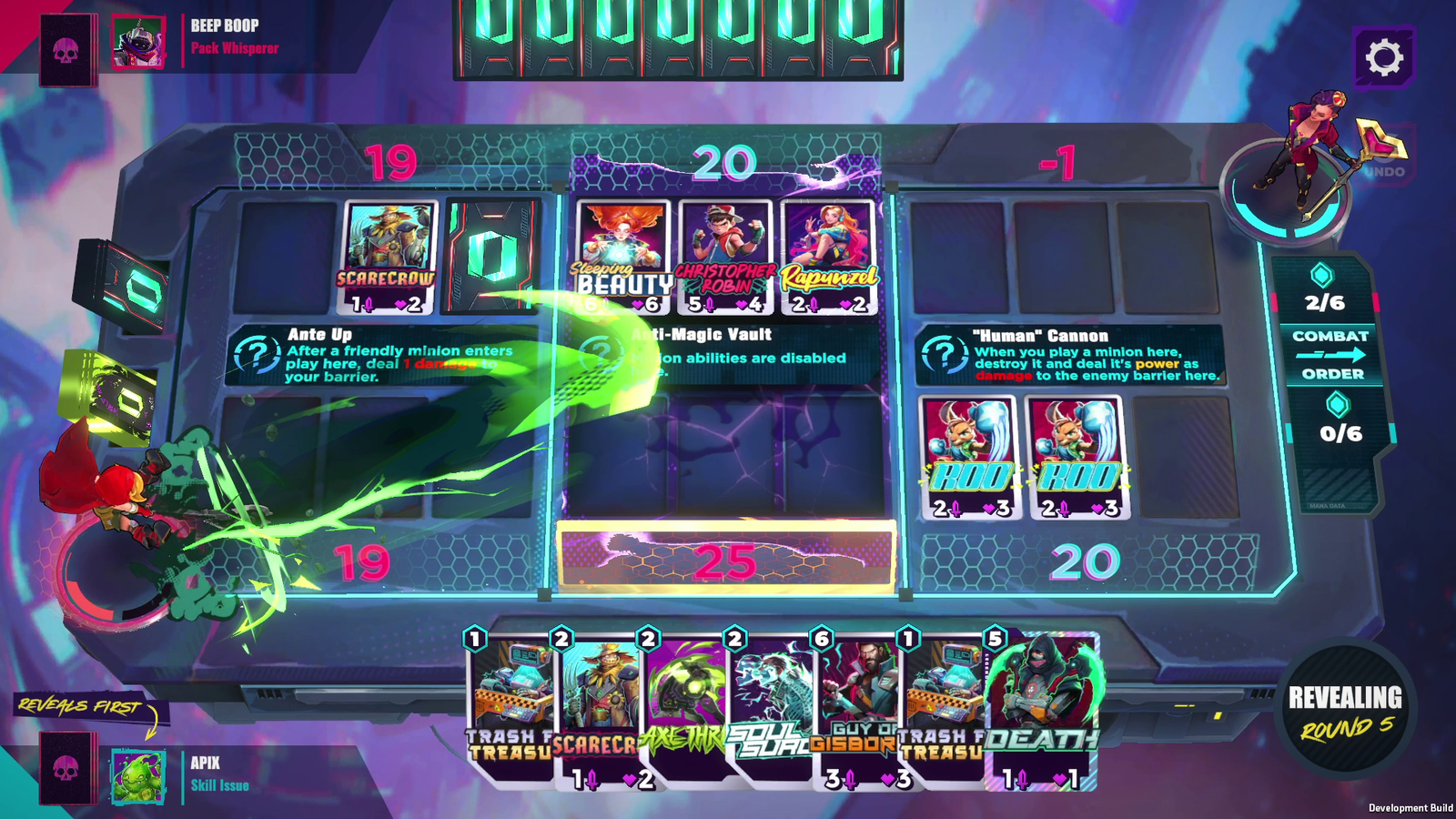
In this screenshot, location descriptions run through the centre, enemy barriers sit above them and yours below. Your hand is at the bottom and mana counters are on the right. Read a location before placing a card: the wrong position can undermine an otherwise useful play.
Before the first round: your deck and opening hand
Deck construction uses one Legendary and twelve other card choices. The twelve are included as two copies each, making 25 cards in total despite the thirteen choices in the builder. A deck’s Legendary and the cosmetic character representing you are not necessarily the same thing.
The mulligan lets you replace opening cards. Look for a hand you can use early instead of keeping only expensive plays. The opponent’s Legendary preview gives an early clue about the plan you may face.
Plan around available mana
Mana pays for cards. Compare their costs with your available counter; your budget develops over the rounds and effects can modify it. Do not assume unused mana will be saved: check the location and active effects.
Budget example: with 6 available mana, a 2-cost card and a 4-cost card cost 6 together. That arithmetic does not make the sequence correct: check targets, spaces and interactions. Spending every point is not a useful goal if the play loses a barrier.
A round: plan, reveal, fight
- Plan: both players prepare their cards during the same phase. Predict what the opponent might do.
- Commit: check lanes, targets and mana before confirming your actions.
- Reveal: cards and effects resolve according to the game’s priority. Check “Reveals First”: a target may change before your effect happens.
- Fight: characters attack automatically in board order. “Combat Order” and card placement matter; damage is not one simultaneous board-wide calculation.
- Review: inspect survivors, barriers and after-combat effects before planning the next round.
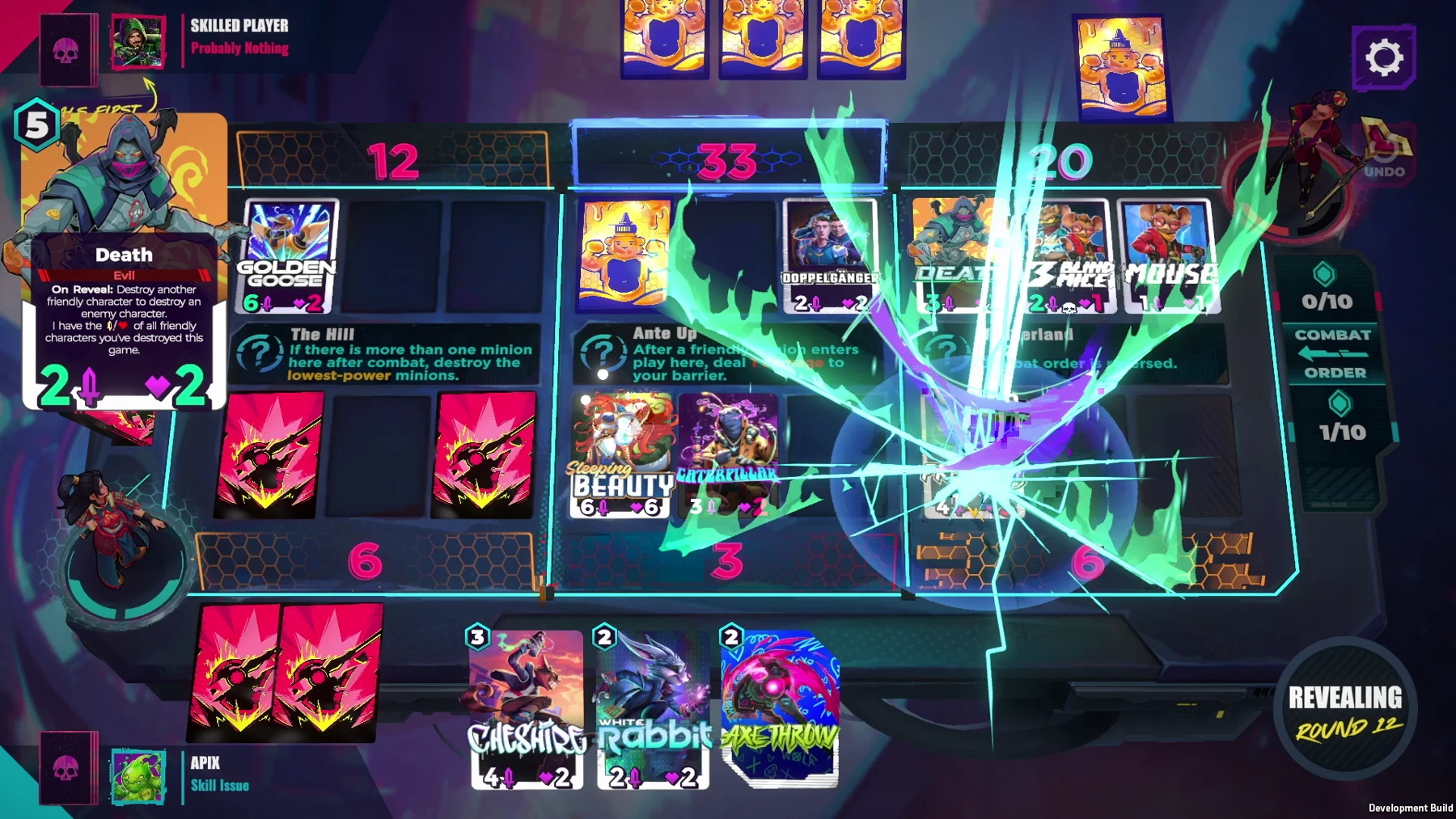
On 29 October, developer Fenchurch clarified that combat progresses space by space. If an effect creates a card during combat, its ability to attack can depend on where it appears. Do not assume every newly created card attacks immediately.
Power, health and attacks
Power indicates attack damage; health indicates how much a character can take. An enemy directly opposite can block the attack path. Without an opposing character, an ordinary attack can hit the barrier. Abilities such as First Strike, Double Attack and Trample alter the result: read their in-game explanations.
Simplified example: a 3-power character attacking a target with 2 health can destroy it without automatically dealing its spare point to the barrier. An effect such as Trample must permit that damage, and protection still matters. Also consider what the opponent does before your attack.
Check these before committing
- Could one of my barriers break this round?
- Does the location improve or cancel my effect?
- Who reveals first, and will my target still exist?
- What happens at this character’s space during combat?
- Does this action serve my plan or merely spend mana?
Ready to play? Follow the getting-started route. For the collection side, read what is free and what is paid.