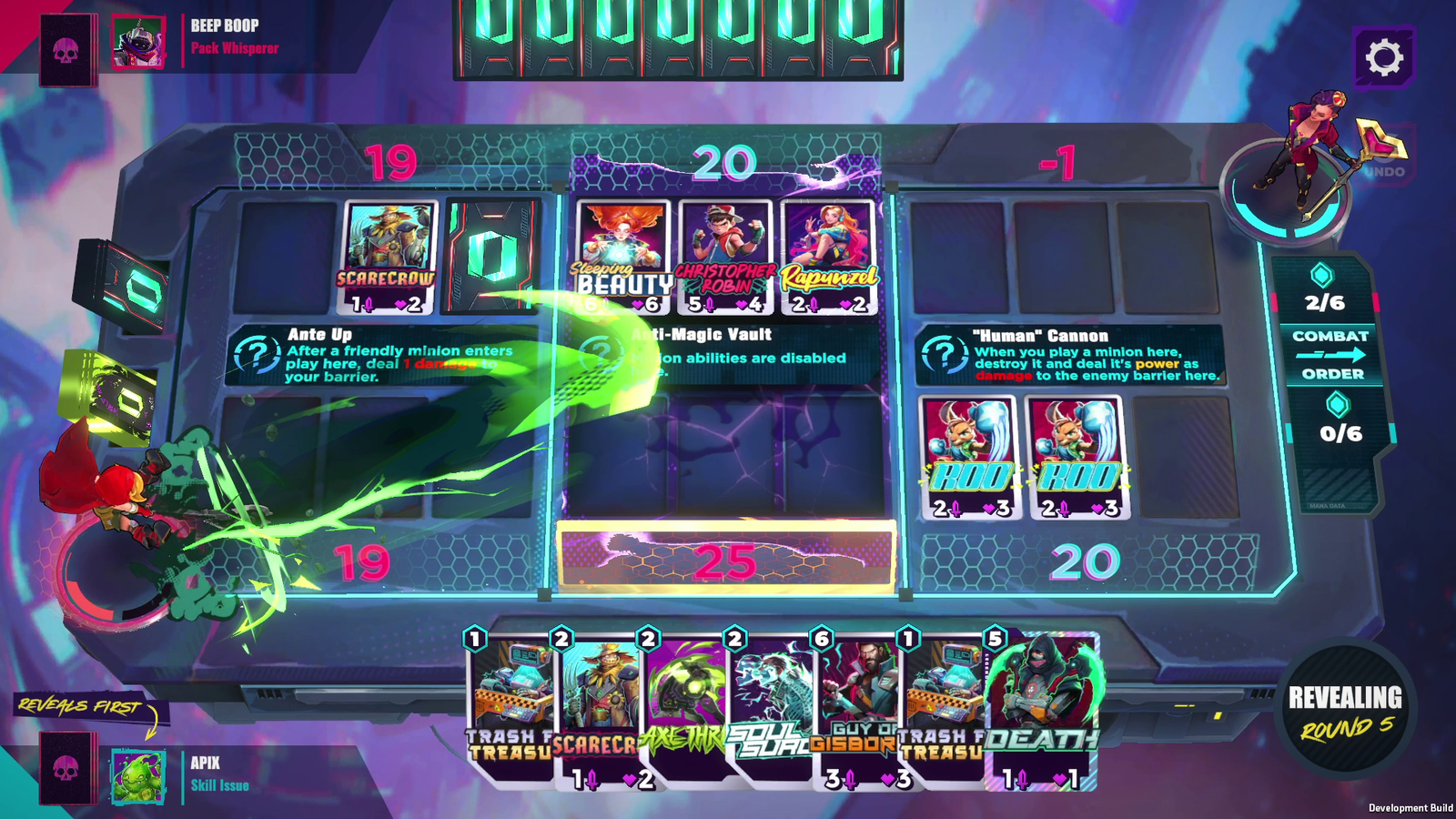
Read the location before choosing a card
A good card can be a poor play in the wrong lane. Read the location, count the available spaces and check what your opponent already threatens. Before committing, explain what you expect that card to achieve here. See our match walkthrough if the board is still unfamiliar.
Spend mana for a purpose
Using every available point is not a goal by itself. Compare a larger card with two smaller plays, including where they can fit and whether their effects have useful targets. Avoid preparing a combination that requires more mana or board space than you actually have.
Do not treat planning as the final board
Both players make decisions. Your opponent’s reveal and the location can change the situation you planned around. Read trigger conditions and reveal timing before relying on an interaction. Our card and keyword guide explains how to unpack that text.
Keep the match objective in view
A large attack number or a favourable exchange does not automatically win the match. Ask which barrier is under pressure and which lane needs protection. When you lose a barrier, review the decisions that created that pressure rather than blaming only the final attacker.
Change one thing after a loss
Keep playing one understandable deck while you learn its openings. Write down a recurring problem before replacing cards. Our first-deck guide gives you a method for testing a change. A cosmetic purchase is not a fix for a weak opening: read what is free and paid before buying.
Three questions after each match
- Which location or ability did I overlook?
- Which play lacked space, a useful target or a clear purpose?
- What one decision will I try differently next time?
Return to the beginner learning path and choose the guide that answers your question.